FibreRebar installed in a concrete structure
Composite fiberglass reinforcement

The future of reinforcement:
fibre vs. steel rebar.

While steel has been the traditional standard for concrete reinforcement, glass-fibre-reinforced polymer (GFRP) and carbon-fibre rebar are fundamentally shifting project risk profiles and balance sheets. For corrosive, safety-critical, or weight-sensitive structures, composite rebar dramatically outperforms traditional steel in longevity, handling, and total life-cycle cost.


Why fibre rebar wins in the field

Engineered to change the project risk profile.

Composite rebar uses high-strength glass fibres embedded in a polymer matrix, typically epoxy or polyester. It strengthens concrete while addressing the corrosion, handling and lifecycle challenges of steel.
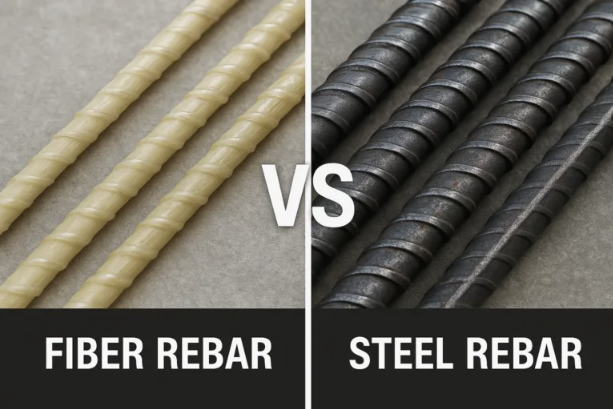
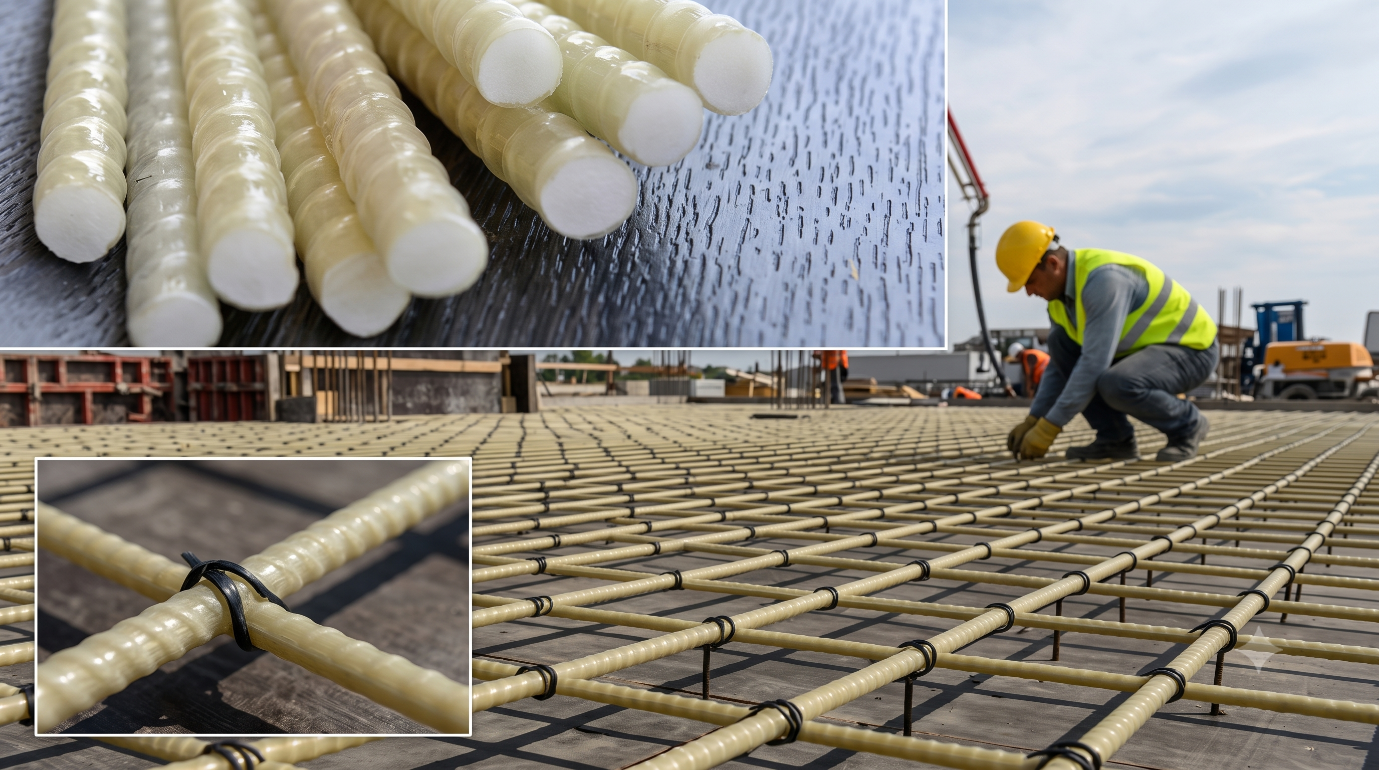
Comparison between fibre rebar and steel rebar
Zero corrosion

Impervious to water, salt and harsh chemicals. Fibre rebar will not rust, avoiding expensive coatings, patching and corrosion-related deterioration.

0% lighter

Lower weight reduces shipping loads and crane dependence. Bundles can be hand-carried to streamline installation; sites using composite rebar report a 0% reduction in strain-related injuries.

High tensile strength

Typical GFRP tensile strength is approximately 1,000 MPa, compared with around 460 MPa for standard black steel.

Non-conductive

Its dielectric properties make it appropriate to consider for electrically sensitive environments, including MRI suites, switchyards and utility projects.

Fire-resistant

Composite reinforcement can be specified for fire-rated structures alongside project-specific engineering requirements.

100+ year design life

Estimated service life can exceed 100 years in suitable applications, compared with a typical 25–30-year lifespan for conventional steel reinforcement.

The numbers

GFRP rebar compared with black steel.

Performance values are indicative and should be confirmed against the product data sheet and project design requirements.

0MPa tensile strength
0%lighter than steel
0+year design life
FeatureGFRP RebarBlack Steel Rebar
Tensile strength1,000 MPa460 MPa
Density (weight)1.9 g/cm³7.8 g/cm³
Corrosion / rustNone (~0% loss)High (8–12% loss)
10-year salt-spray mass loss~0%Subject to corrosion

Design note: GFRP has a lower modulus of elasticity than steel. Design codes may require longer lap splices; proprietary anchors can help offset this. Final detailing must follow the relevant project codes and engineering design.

FibreRebar reinforcement grid being installed on site
Total cost of ownership & ROI

Highly competitive from day one.

GFRP offers immediate project savings before the concrete is even poured. Its significant weight reduction directly lowers upfront installation expenses by reducing inland freight, requiring fewer container loads, and minimizing crane days on site.

Across a 50-year lifecycle, fibre rebar can reduce total ownership costs by up to 24% by avoiding cathodic protection, patch repairs, traffic outages, and early replacements. In high-risk coastal zones, some insurers are increasingly offering 5–8% premium discounts for FRP-reinforced assets.

Up to 24%lower lifecycle ownership costUp to 75%less CO₂ per delivered tensile-capacity-ton
Standard GFRP rebar diameters

Familiar sizes for modern reinforcement.

GFRP rebar is manufactured in standardized sizes that correspond directly to traditional steel dimensions, including sizes governed by ASTM D7957 and ACI 440.1R.

Smaller bars are highly efficient because tensile strength decreases slightly as the bar becomes thicker due to shear lag within the fibre core.
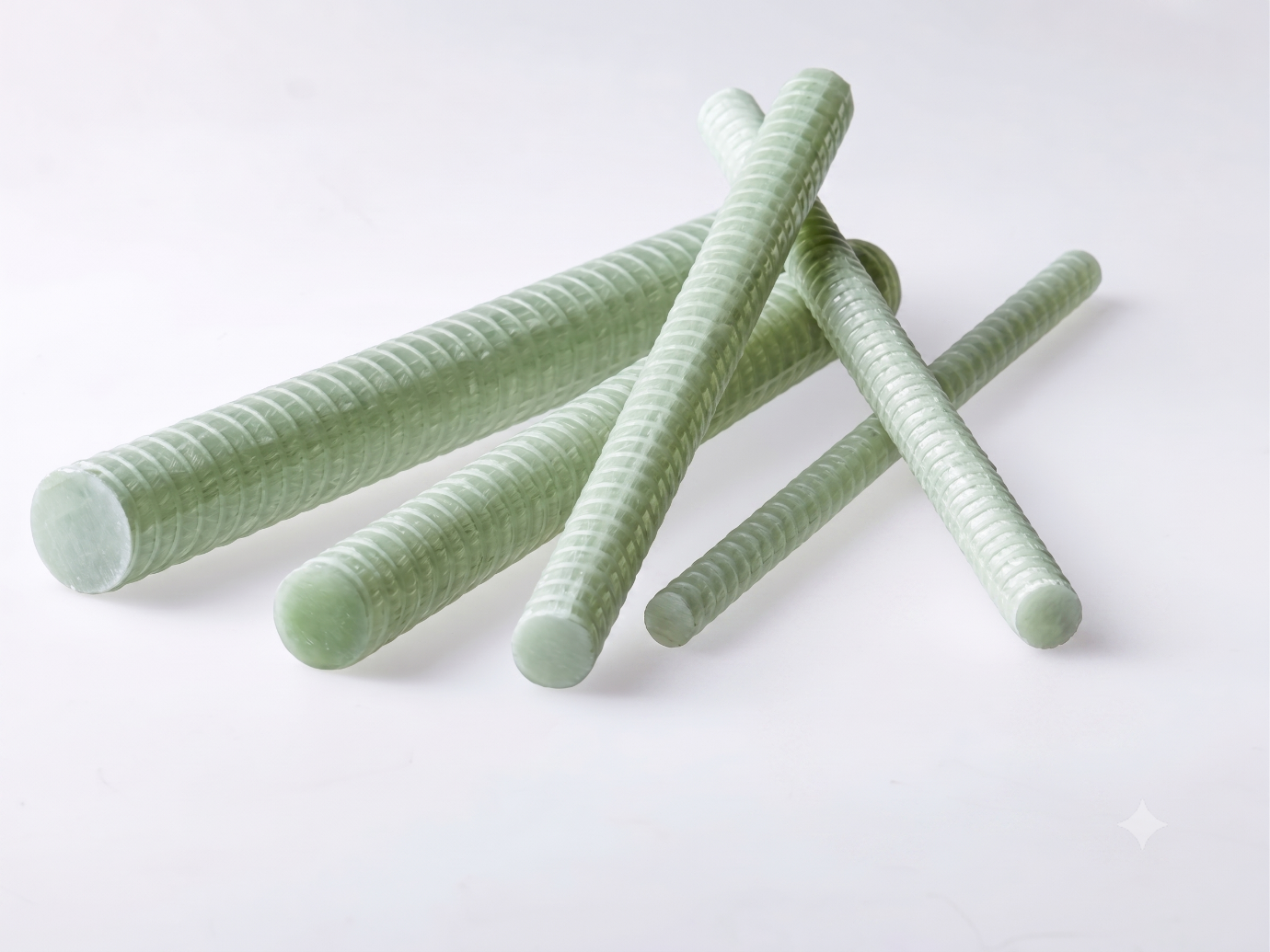
FibreRebar bars in several diameters
DesignationMetric sizeImperial sizeTypical guaranteed tensile strengthTypical application
#16 mm1/4"~1100 MPaSlabs, pavements, boundary walls
#210 mm3/8"~1050 MPaResidential slabs, stirrups
#313 mm1/2"~1000 MPaBeams, columns, light commercial
#416 mm5/8"~950 MPaBridges, retaining walls, heavy beams
#519 mm3/4"~900 MPaHeavier structural elements
#622 mm7/8"~850 MPaHigh-load applications
#725 mm1"~800 MPaHeavy infrastructure, marine works
#829 mm1-1/8"~750 MPaSpecialized heavy infrastructure
#932 mm1-1/4"~700 MPaHeavy foundation piling

Tensile strengths vary by manufacturer and resin matrix; the figures above are typical guaranteed minimums.

Applications & considerations

A long-term reinforcement solution for demanding builds.

01 / MARINE & COASTAL

Corrosion-prone structures

Suitable to assess for assets exposed to salt, water and aggressive chemical conditions.

02 / INFRASTRUCTURE

Bridges, tunnels & foundations

Available in dimensions suited to heavy infrastructure, retaining walls and foundation piling.

03 / ELECTRICAL ENVIRONMENTS

Non-conductive reinforcement

Consider for MRI suites, switchyards and utility projects requiring dielectric reinforcement.

Ready to upgrade your next build?

Contact our composites engineering team for a complimentary reinforcement audit or bulk-buy quotation, and see how FibreRebar can streamline your project.